Why Cost Estimates Are Difficult — and How to Read Them
"How much does it cost to build a house in Namibia?" is the right first question. The honest answer is: it depends on too many variables for a single number to be meaningful. What you can do is understand the cost drivers well enough to build a realistic budget before you approach a contractor.
This guide breaks down those drivers clearly.
The Main Cost Drivers
1. Size (floor area) Cost is typically estimated per square metre of built area. A larger house costs more in absolute terms. However, cost per square metre often decreases for larger houses because some fixed costs (foundations, roof connection, electrical distribution board) are spread over more area.
2. Specification level A basic finish — plaster, paint, standard tiles, standard fittings — costs significantly less than a premium finish with imported tiles, bespoke joinery, and high-end sanitary ware. Specification decisions drive a large part of the per-square-metre rate.
3. Site conditions A flat, clear site with good ground conditions is the cheapest to build on. A sloped site, a site with poor soil bearing capacity, or a site that requires significant clearing and levelling adds cost. A geotechnical assessment (soil test) may be needed before you can finalise a foundation design.
4. Location Building in Windhoek typically costs more than building in Tsumeb or Otavi, because supplier and subcontractor costs are higher. On the other hand, if your chosen contractor is not local, mobilisation and accommodation costs add to the bill wherever you build.
5. Labour market at the time of construction Artisan availability varies. In periods of high construction activity, skilled tradespeople are harder to book and rates are higher. Plan your project well in advance.
6. Materials availability and import costs Many materials — steel, some plumbing fittings, electrical components — are imported. Exchange rate movements affect prices. Lock in material quotes close to project start, not months in advance.
Typical Scope Items and Their Contribution to Cost
A full house build covers:
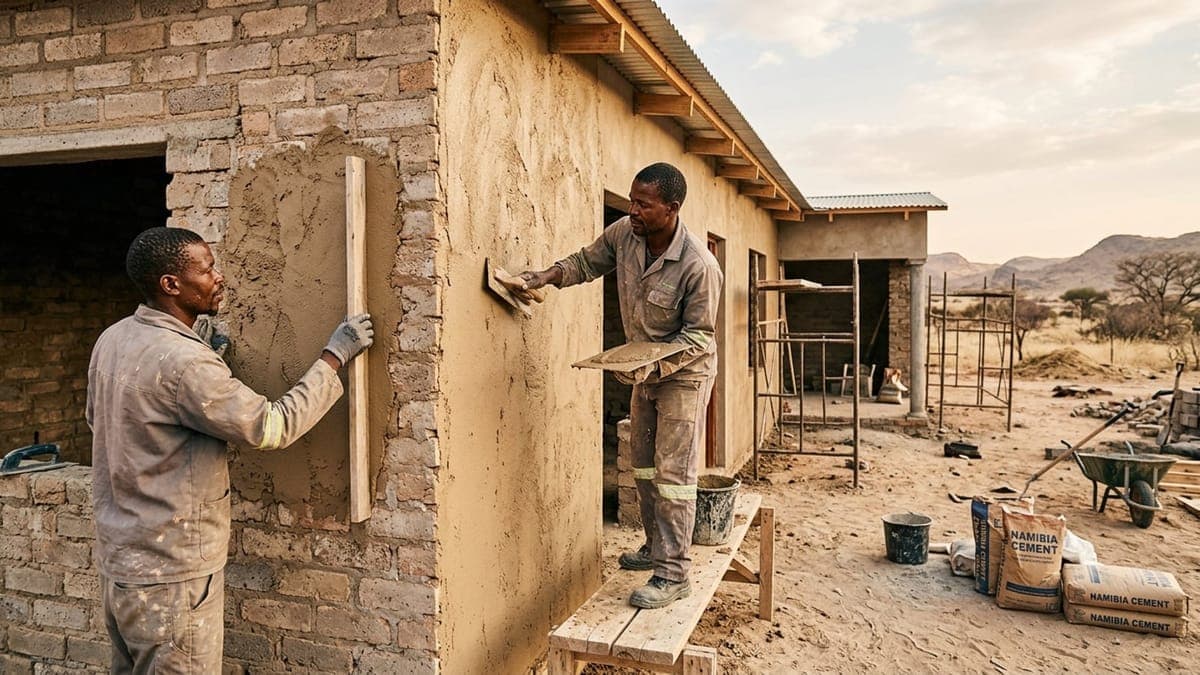
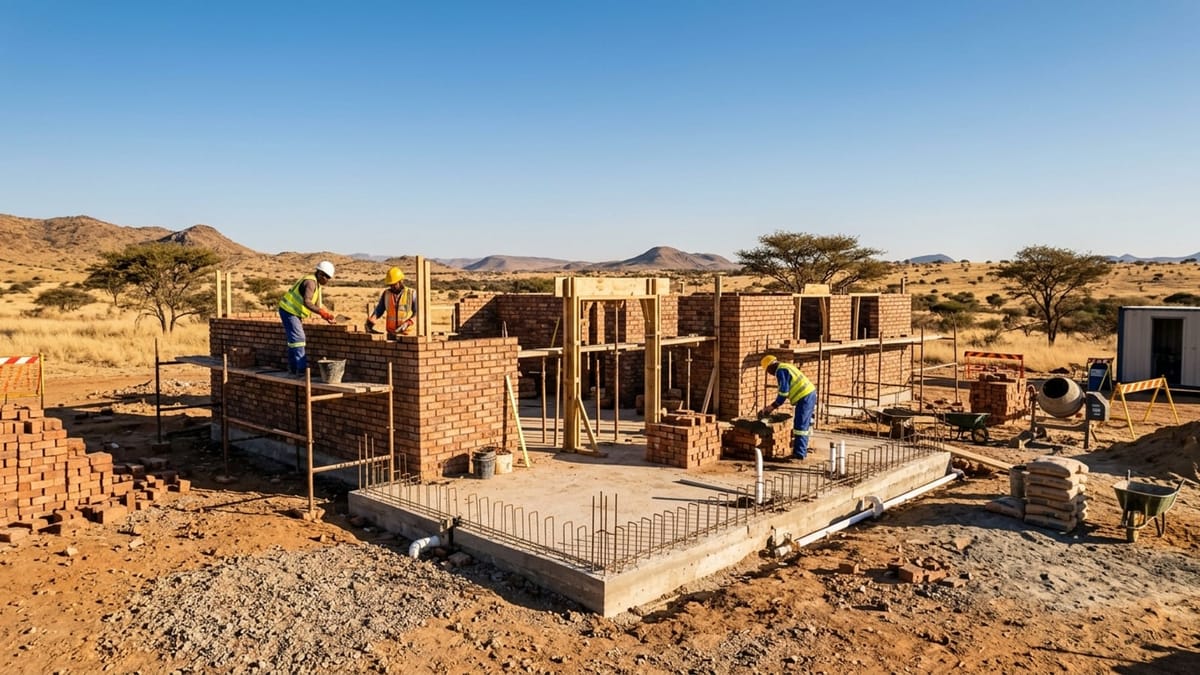
- Substructure: Site clearance, excavation, foundations, ground slab - Superstructure: Walls (brick, block, or alternative), lintels, columns - Roof: Structure (timber or steel), covering (IBR, clay tiles, concrete tiles), fascias and gutters - Joinery: Windows, doors, frames - Wet trades: Plumbing supply and waste, bathroom and kitchen fit-out - Electrical: Distribution board, circuits, lighting, plug points - Finishes: Plaster, screed, tiles or flooring, paint - External: Paving, boundary wall, gate (if required)
Each category has a range. A contractor's detailed quotation should break these down so you know where your money goes.
How to Budget Responsibly
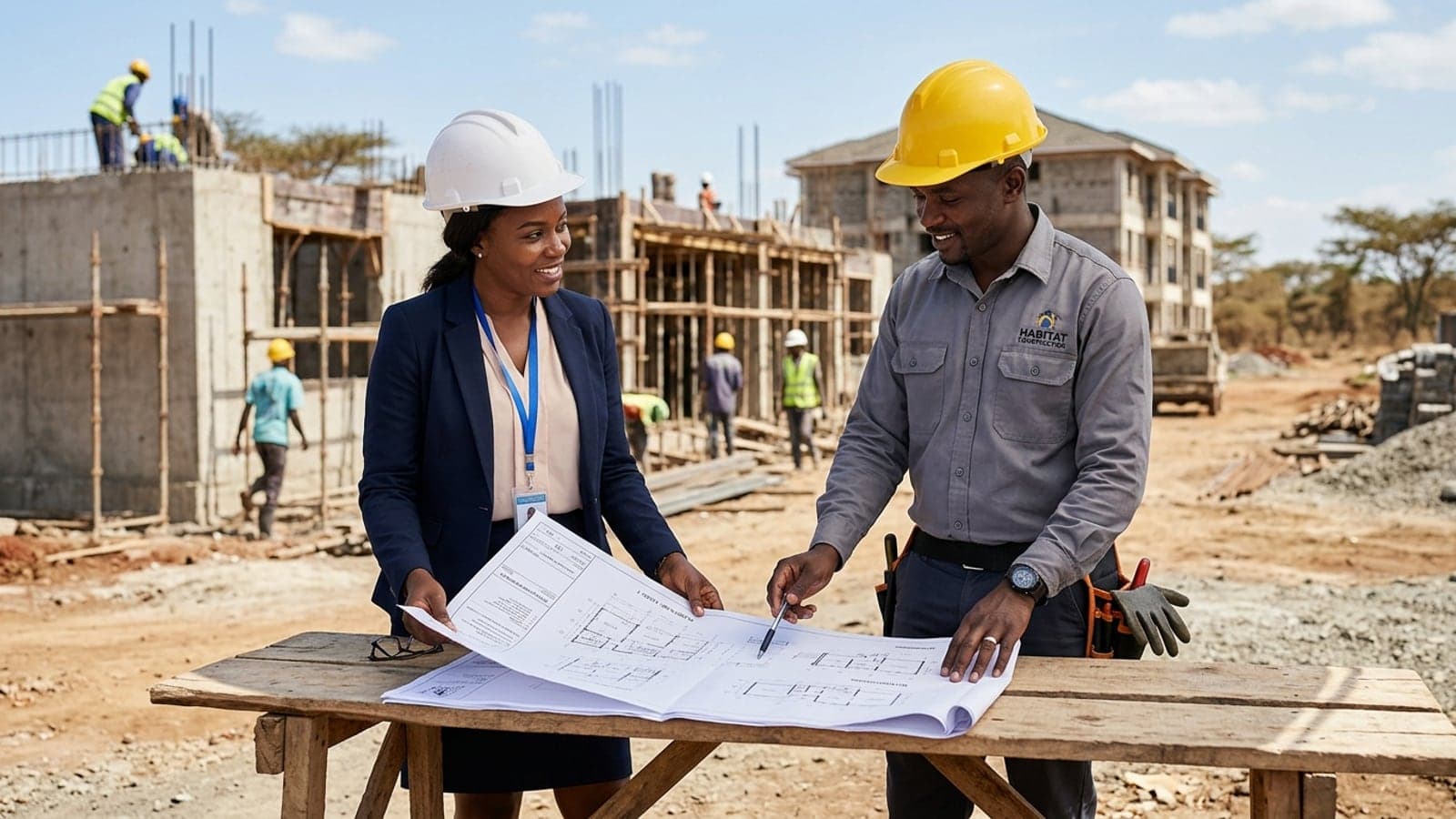
1. Start with a concept plan. Even a simple sketch helps a contractor understand what you want and price it accurately.
2. Get at least two written quotations. A single quote gives you no reference point. Two or three quotes let you identify outliers and ask informed questions.
3. Do not strip out contingency. A minimum 10–15% contingency for unknown ground conditions, scope changes, or material price movements is standard practice in Namibian construction.
4. Understand what is excluded. Ask the contractor to list explicitly what is not in their price — external works, connection fees, professional fees, permit costs.
5. Phase if needed. If the full build exceeds budget, discuss phasing with your contractor. A complete watertight structure first (substructure, walls, roof, windows, doors) that can be finished out later is often practical.
Professional Fees and Permit Costs
These are often forgotten in early budget discussions:
- Architectural or draughting fees: Required for council-approved drawings (building permit). Fees vary by professional and by complexity. - Engineer's fees: Required for structural design where load-bearing structures or unusual conditions are involved. - Building permit: Charged by the local authority, typically based on estimated construction value. - Electrical compliance certificate (CoC): Required on completion for a new electrical installation.
Allow for these in your budget. They are not optional.
Building in Tsumeb, Otavi, and Windhoek
Diligent Investments has completed new residential construction in Tsumeb (a four-bedroom modern townhouse), mass housing in Otavi (20 houses at Otavi New Development), and institutional buildings in Windhoek (a three-classroom block at Delta Primary School). We can provide detailed quotations for new builds and renovations across these areas.
We are a service-area contractor — we come to the site. There is no public walk-in office.
// FAQ's