Welding as a Trade in Namibia
Welding is one of the most versatile trades in construction and industry. In Namibia, welding services are in demand across residential construction, commercial property, infrastructure projects, agricultural operations, and manufacturing. Yet many clients who need welding work done are unsure of the difference between welding types, how to specify what they need, or how to choose a competent contractor.
This guide covers the fundamentals.
Types of Welding Work
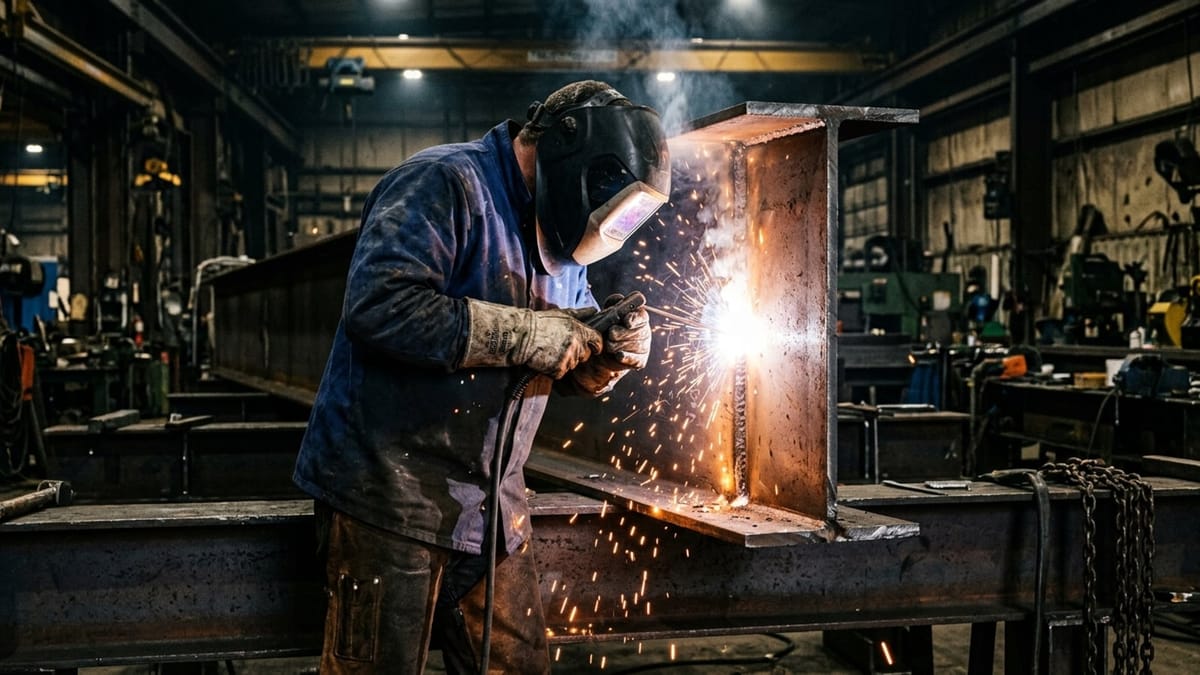
Structural welding joins steel members — columns, beams, trusses, and frames — in buildings, carports, canopies, and industrial structures. It requires high-quality welds that meet engineering specifications, because failures can be catastrophic. Structural welding is commonly required alongside construction projects.
Pipe welding joins metal pipes for water, gas, fuel, and process lines. In Namibia, pipe welding is common in plumbing, water supply infrastructure, and industrial plant. The quality requirements are high — a leaking weld in a buried pipe is expensive to repair.
Fabrication welding builds components from raw metal — gates, security bars, window guards, staircases, handrails, trailers, tanks, and custom metalwork. This is often creative and bespoke, requiring a fabricator who can work from a drawing or a concept.
Maintenance and repair welding fixes broken or cracked metal on equipment, machinery, trailers, agricultural implements, and building components. Speed and access matter as much as quality — downtime is costly.
Materials Welded in Namibia
Most welding in Namibian construction and industry involves:
Mild steel — the most common structural and fabrication material. Widely available, easy to weld, affordable.
Stainless steel — used for hygienic applications (food, medical, water), decorative finishes, and corrosion-resistant components. Requires more skill and specific consumables than mild steel.
Aluminium — lightweight and corrosion-resistant. Common in windows, doors, boats, and some structural applications. Requires specialist equipment (TIG or MIG with appropriate wire and shielding gas).
The material determines the welding process, consumables, and skill level required. Always tell your contractor what material you need welded.
Welding Processes
SMAW (Shielded Metal Arc Welding / "stick welding") — the most widely used process in Namibia for general construction and repair. Versatile, portable, works in wind and outdoors. Good for mild steel structural work.
MIG/MAG (Metal Inert/Active Gas) — faster than SMAW, good for fabrication shop work and medium-volume production. Less portable in the field.
TIG (Tungsten Inert Gas) — highest quality welds, used for stainless steel, aluminium, and precision work. Slower and more expensive.
Gas welding and cutting — used for cutting, preheating, and some repair work. Oxy-acetylene sets are common in Namibian workshops.
For most construction and general fabrication, SMAW or MIG is appropriate. For stainless steel or aluminium, ask specifically about TIG capability.
What to Look for in a Welding Contractor
1. Demonstrated experience in your specific application. A fabricator who makes gates and burglar bars is not automatically qualified to weld structural steel. Ask for examples of work similar to yours.
2. Equipment in good condition. A welding machine that is not maintained produces inconsistent welds. A professional contractor's equipment will be well-maintained and calibrated.
3. Proper safety practice. Welding produces UV radiation, fumes, spatter, and fire risk. A professional contractor uses appropriate PPE (welding helmets, gloves, screens), has a fire extinguisher on site, and considers bystander safety.
4. Written quotation. Even for relatively small jobs, a written quote with scope, materials, and price is standard practice for a reputable contractor.
5. Guarantee on workmanship. A confident welder will stand behind their work for a reasonable defects period.
Common Welding Applications in Namibian Residential Construction
- Burglar bars and security screens — steel bars welded to frames and fixed to window or door openings. A standard residential security requirement across Namibia. - Gates and sliding doors — fabricated from steel or aluminium flat bar, angle, and tube. Often the most visible metalwork on a property. - Carports and shade structures — steel portal frames or purlins supporting IBR or polycarbonate sheeting. - Boundary and garden fencing — flat bar or expanded metal welded to steel posts. - Roof trusses and purlins — structural steel welded to carry the roof covering on commercial and industrial buildings. - Stairs and handrails — steel or stainless steel, fabricated to suit the structure.
Welding for Infrastructure and Civil Projects
Beyond residential, welding is critical in civil and infrastructure work:
- Water supply pipelines — steel pipe sections welded in-situ, used in bulk water supply projects. - Steel culverts and drainage channels — fabricated from steel plate and installed in road and stormwater drainage projects. - Equipment and plant maintenance — site plant (graders, excavators, compactors) requires regular weld repairs to buckets, frames, and wear parts. - Structural steel in bridges and culvert headwalls — welded connections between structural steel members.
Diligent Investments: Welding and Plumbing in Namibia
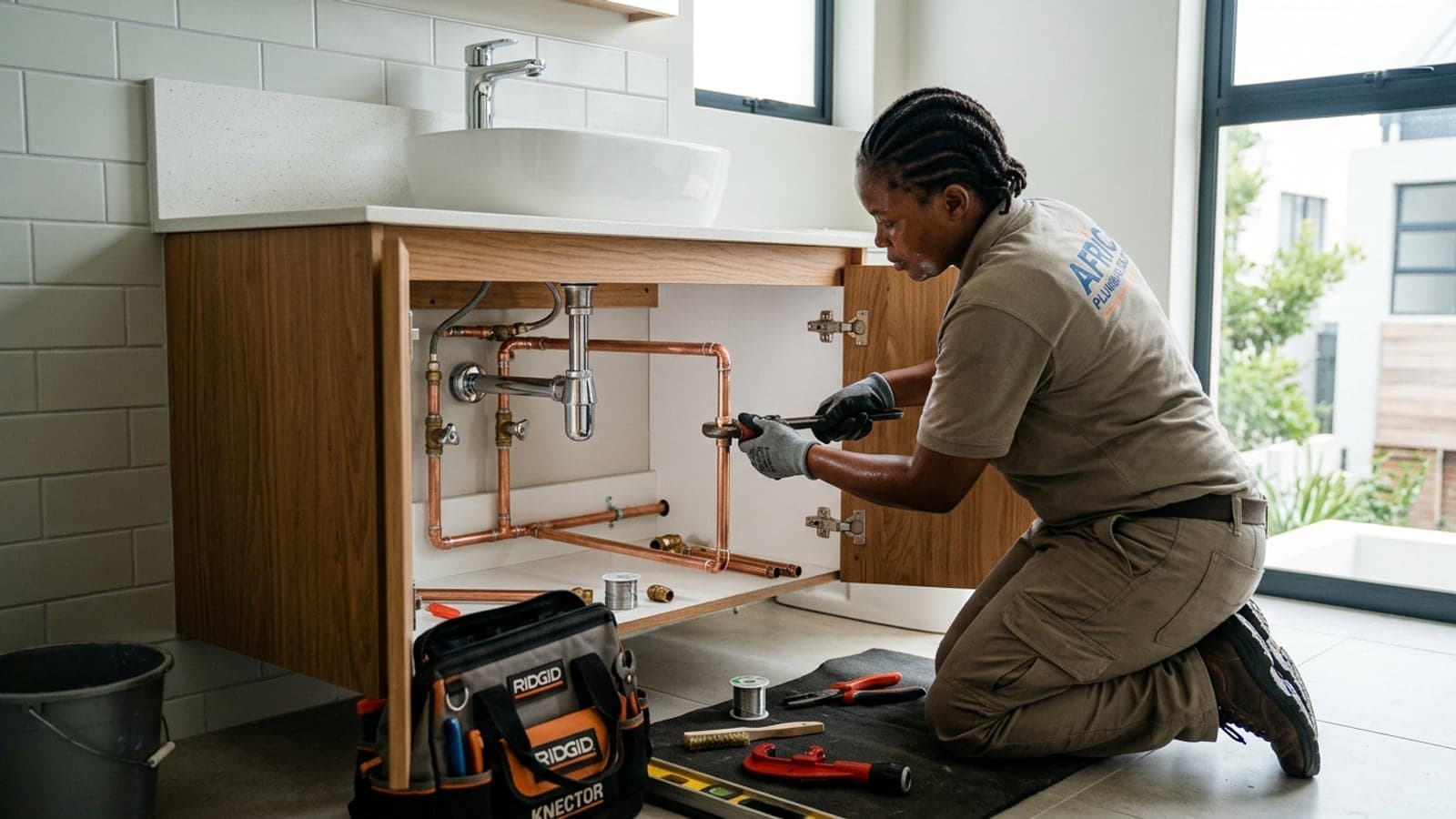
Diligent Investments provides welding and plumbing services as part of our broader general contracting capability. We work across Tsumeb, Otavi, the Oshikoto Region, and Windhoek, coming to the site for each job. There is no public walk-in office.
For welding or plumbing enquiries — residential, commercial, or infrastructure — call or email us with a description of your project.
// FAQ's