What Are Bulk Earthworks?
Bulk earthworks is the large-scale moving, reshaping, and compaction of earth to prepare a site for construction. It is the first and most fundamental phase of almost any significant civil or building project — before a foundation can be cast, a road built, or a drainage system installed, the ground must be shaped correctly.
In Namibia, bulk earthworks are required for residential subdivisions, industrial sites, road construction, mining operations, dam construction, and agricultural land preparation. This guide explains what is involved and what to look for in an earthworks contractor.
Key Earthworks Activities
Site strip: The removal of topsoil and vegetation from the area to be worked. Topsoil is unsuitable as a foundation material — it is organic, compressible, and unstable. It is stripped and stockpiled (for reuse in landscaping) or removed.
Bulk cut: Excavation of material from high areas of the site to reach the design formation level. Cut material is either reused as fill or hauled away.
Bulk fill: Placement of material in low areas of the site to reach design formation level. Fill must be placed in controlled layers and compacted to a specified density. Poorly compacted fill will settle unevenly under load — a major cause of structural failure.
Compaction: The process of mechanically densifying soil by applying dynamic load (vibration, rolling, impact). The required compaction specification (typically expressed as a percentage of Modified AASHTO density) is set by the engineer based on the planned use.
Subgrade preparation: Final shaping and compaction of the formation level that will directly receive the road pavement structure, slab, or foundation. The subgrade must be stable, flat (or to designed grade), and free of weak spots.
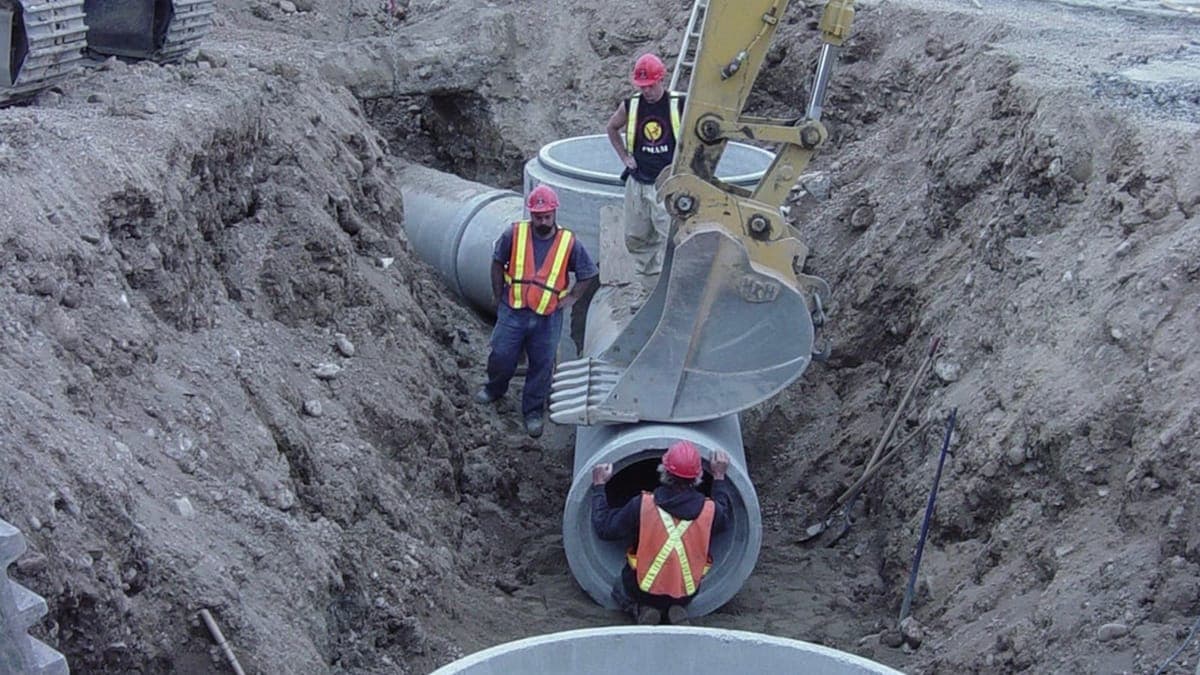
Drainage preparation: Cutting of drainage channels, installation of culverts, shaping of swales, and preparation for storm water infrastructure. Good earthworks always incorporates drainage from the start.
Plant Used in Bulk Earthworks
The correct plant selection for earthworks depends on soil type, volume, access, and programme:
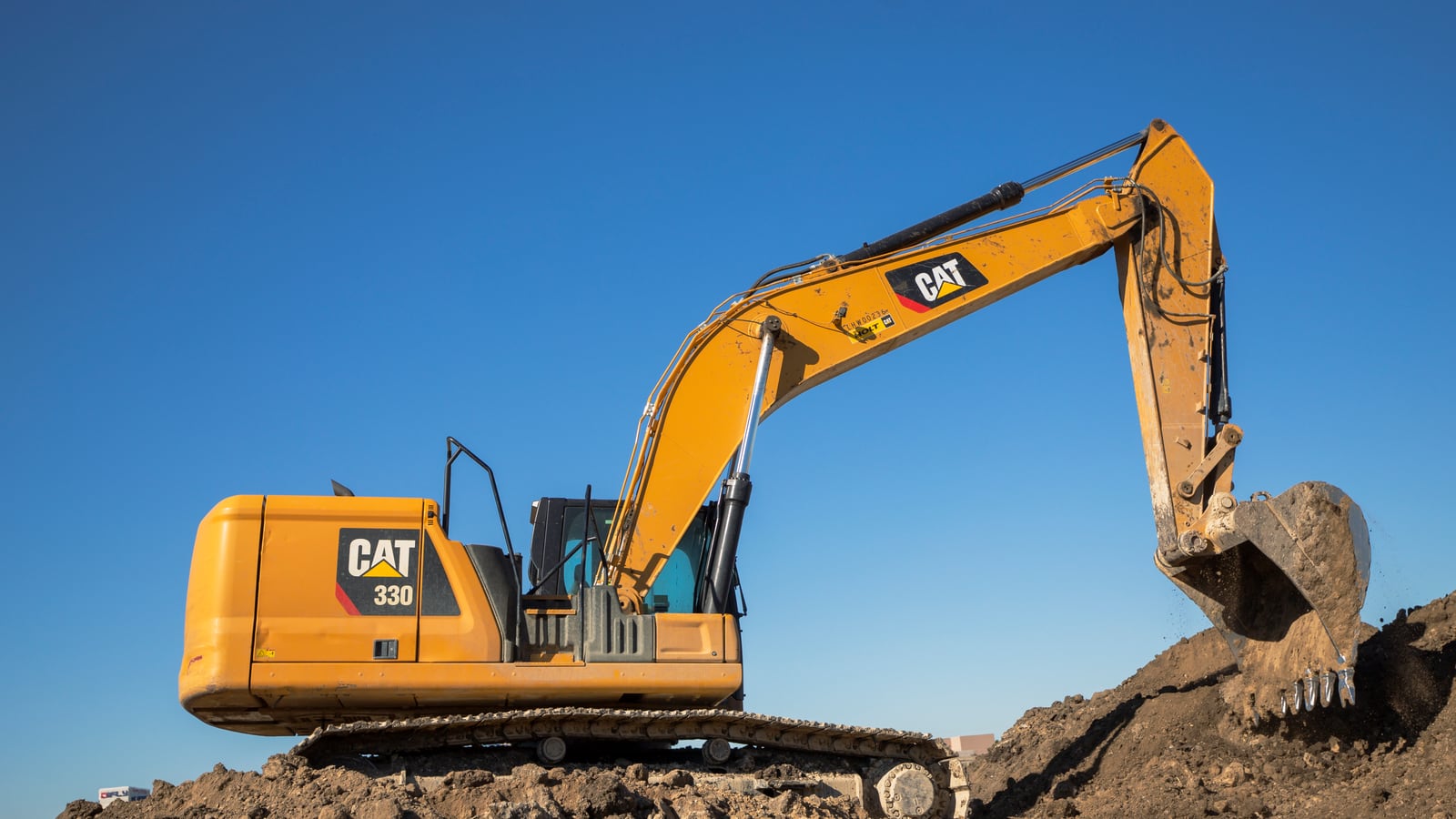
Excavators (hydraulic backhoe): The most versatile earthworks machine. Used for bulk excavation, trenching, shaping, loading, and demolition. Available in various sizes (mini, standard, large).
TLB (Tractor Loader Backhoe): More versatile than an excavator for mixed tasks on small to medium sites. Used in Namibia for general excavation, trenching, and material movement.
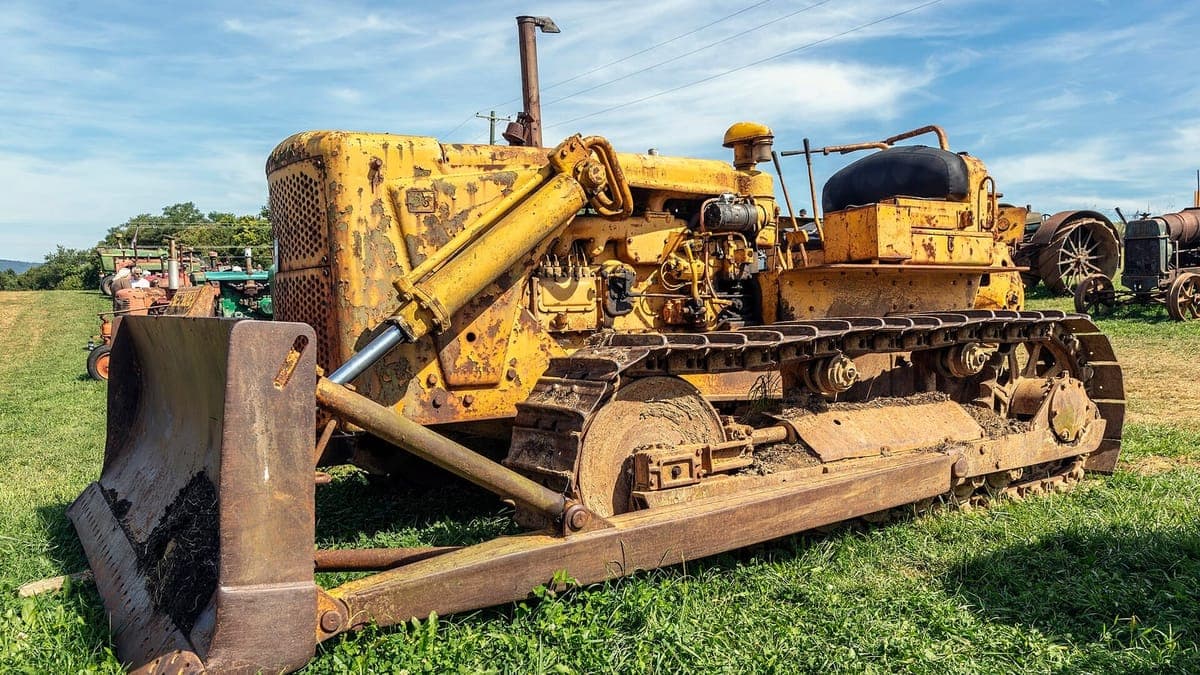
Dozer (bulldozer): Used for spreading, pushing material over short distances, and clearing vegetation. Not efficient for loading trucks.
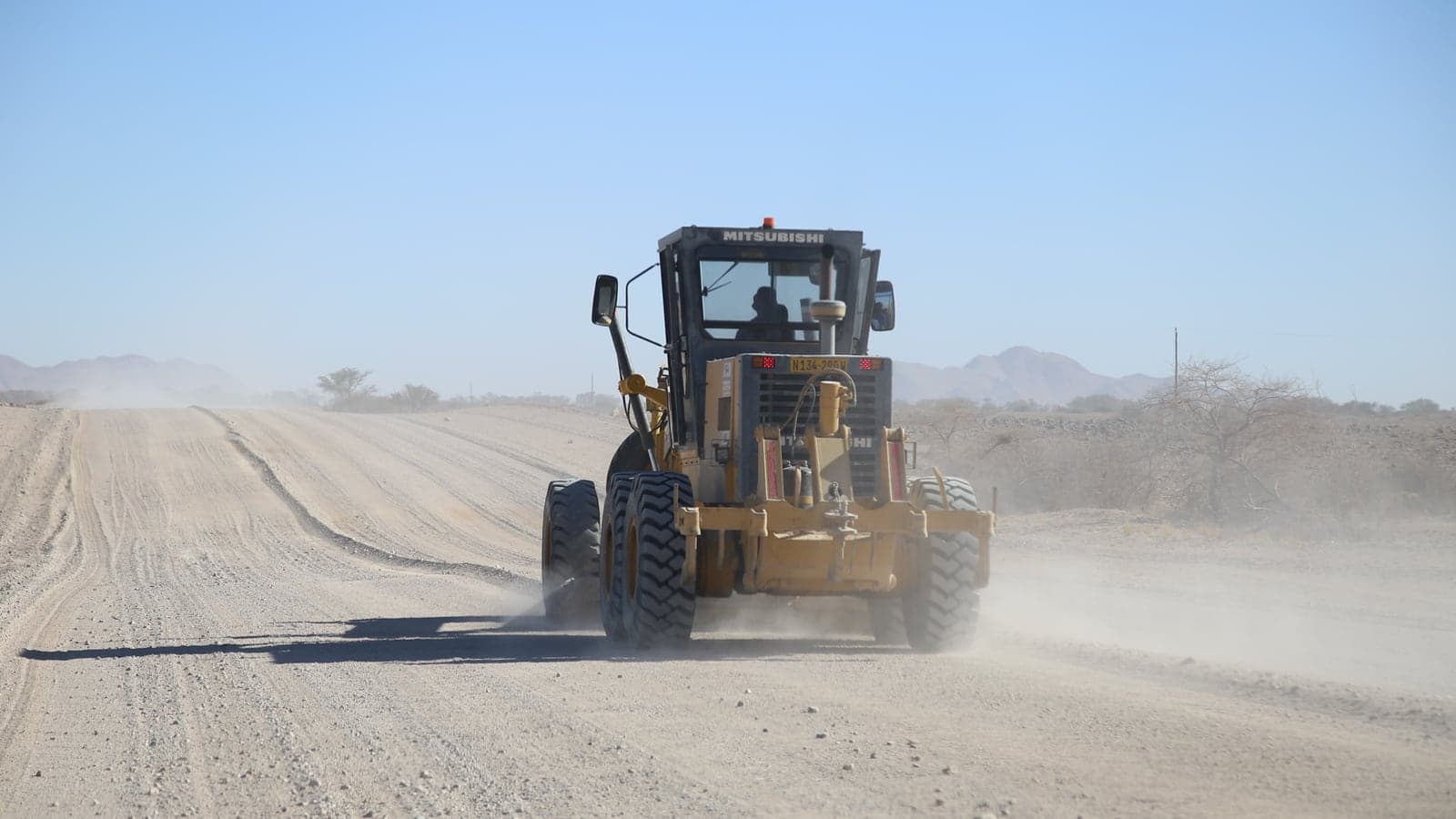
Motor grader: Used for fine shaping of formation levels, creation of cross-falls and drainage channels, and road surface finishing. Essential for road projects.
Vibratory roller: For compacting fill material and road surfaces. Pad-foot variants are used for cohesive soils; smooth drum for granular material and finished surfaces.
Water bowser: Earthworks compaction requires material to be at or near optimum moisture content. In Namibia's dry climate, water must often be added. A water bowser is essential on most earthworks sites.
Articulated dump trucks (ADTs) or rigid tippers: For transporting material over longer distances. Capacity and terrain determine the appropriate type.
Materials and Testing
Not all soil is equal. Earthworks contractors and their engineers must understand:
Soil classification: Clay-rich soils behave differently to sandy or gravelly material. Plasticity, bearing capacity, and drainage characteristics differ. Soil tests (particle size analysis, Atterberg limits) inform the design.
Compaction testing: To verify that compaction meets specification, density tests are carried out using a nuclear density gauge or sand replacement test. A reputable contractor will have these tests done by an accredited materials laboratory.
California Bearing Ratio (CBR): A measure of the bearing capacity of the subgrade, used to design road pavements. Low CBR soils may require stabilisation (lime, cement) before they can carry a pavement structure.
Materials sourcing: Where will fill material come from? Borrow pits must be identified, tested, and (on regulated projects) permitted. A contractor who cannot tell you where their fill is coming from is a risk.
Environmental and Regulatory Considerations
Bulk earthworks in Namibia may trigger:
- Environmental clearance: For larger projects, an Environmental Clearance Certificate from the Ministry of Environment, Forestry and Tourism may be required before earthworks can start. - Local authority approval: Site development plans and earthworks permits from the local municipality. - Borrow pit licensing: If material is sourced from a borrow pit on or off site, permits may be required.
A contractor who is experienced with Namibian regulatory requirements will guide you through what applies to your project.
Earthworks in the Oshikoto Region and Windhoek
Diligent Investments provides earthworks and site preparation services as part of our roads and civil infrastructure capability. We work across the Oshikoto Region (including Tsumeb and Otavi) and Windhoek.
Contact us to discuss your earthworks project and programme requirements.
// FAQ's